
Insights · Customer Experience
The OXO Peeler and the Case for Designing for Your Hardest Customer
OXO built a whole product family by starting with one person who could not use the old peeler. What that means for how you serve your customers.
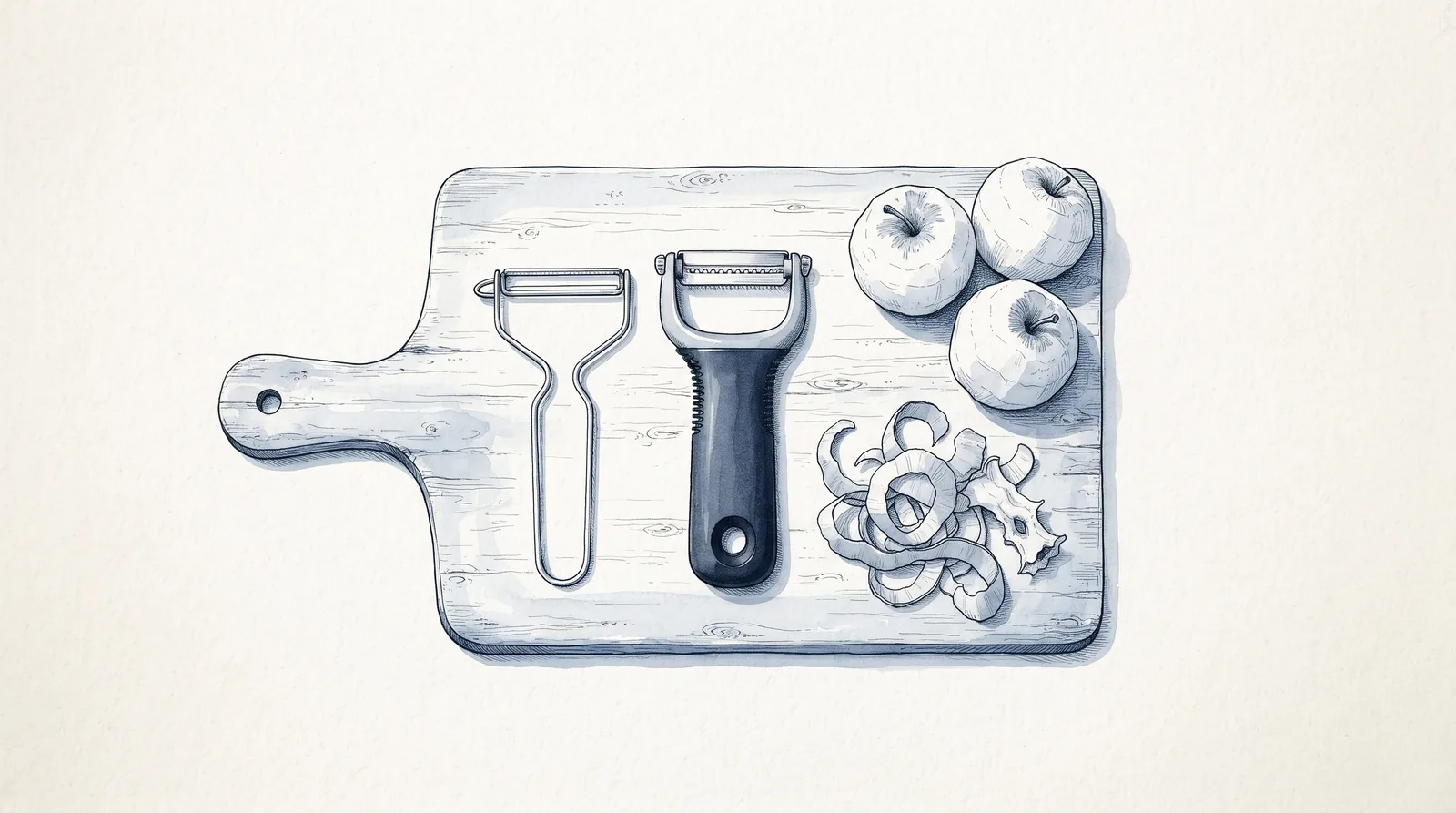
In the late 1980s, Sam Farber was supposed to be retired. He had sold his cookware company and was renting a house in the south of France. His wife, Betsey, who had arthritis in her hands, was peeling apples. The metal peeler hurt.
Most of us would have bought her a different peeler. Farber asked a better question: why does every peeler feel like this? The answer became OXO Good Grips, and it is one of the clearest lessons I know on serving your hardest customer first.
What happened when Sam Farber watched his wife peel apples?
He called the industrial design firm Smart Design. Its founder, Davin Stowell, recalls the call coming past midnight in France, with Farber too excited to sleep and telling him to start right away (Institute of Design).
Did OXO design for one person or for everyone?
Both, on purpose. The brief was an affordable line of utensils that anyone could use, not only people with arthritis, with one handle that could be pulled, pushed or twisted (Museum of Design in Plastics).
The team asked the Arthritis Foundation for people to test prototypes. Gloves could simulate stiff hands, Stowell says, but firsthand insight was essential. They learned the handle had to be larger and non slip, and oval so it would not spin in the hand. They even used force gauges to measure how little effort it took to turn the peeler (Institute of Design).
| What the hardest user taught the team | What changed | Source |
|---|---|---|
| A weak grip cannot hold a thin handle | A larger handle | Institute of Design |
| Wet or tired hands slip | A soft, non slip material | Institute of Design |
| A round handle spins in the hand | An oval shape | Institute of Design |
| Pulling, pushing and twisting all need control | One handle designed for all three | Museum of Design in Plastics |
Everyone else got the same benefits. As Stowell tells it, they were simply designing for people.
Did it sell right away?
No, and the way OXO sold it is half the lesson. The tools looked like nothing else on the shelf, so the packaging put the handle in the shopper's hand. It hung below the cardboard card, and anyone reaching for a peeler had to touch the grip. Stowell called that “fairly unique at the time” (Fast Company; Smart Design).
Even so, early sales at Lechters, the one major retailer willing to take a chance, were very slow. Smart Design talked the store into putting out big steel bowls of peelers and carrots so people could try one on the spot, and that is when the line took off (Fast Company). By 1991 annual sales reached $3 million, and Farber sold the company in 1992 (Museum of Design in Plastics).
When I put this to work
Farber didn't commission a survey. He watched his wife struggle with the peeler and saw how much it hurt. That's why every engagement I run starts with Discovery. It gives me a look at how the business really works and where it hurts, from the people living it. And because I'm looking from the side, my view isn't jaded by years of “this is how we've always done it.”
A property management company I worked with was growing fast. Discovery showed that new owners often needed several reminders before their onboarding paperwork came back. So I designed for the owner who needs the most follow ups: one private link from their own property manager, done on a phone, with no account or password. It asks only what their home needs and says why each item matters. Reminders name only what is still due and stop the moment the owner finishes.
And like OXO's handle outside the card, the team got to hold it before deciding. The proposal was a clickable preview they could tap through on the owner's phone and on their own dashboard, not a slide describing the idea.
How do you design for your hardest customer?
- Find your hardest case. Who struggles most with what you sell or how you run? Sales calls, support tickets and refunds usually point straight at them.
- Watch them, don't just survey them. Stowell says nothing replaces testing with real people, and face to face research catches what AI misses.
- Test with the people who struggle. Simulating the problem helps. Real people with the real problem teach you more.
- Keep the brief wide. Solve for the hardest case, then price and position for everyone.
- Let them feel it before they buy. OXO left the handle outside the card and put out bowls of peelers and carrots.
- Let AI sort the pile, then go watch the person. AI can sift reviews and tickets to find where people struggle. It cannot tell you what they feel.
Fix it for the person who struggles most, and everyone else gets a better version for free.
Read the full article
What is universal design?
Universal design means making products and spaces usable by the widest range of people without special adaptation. MoMA holds Good Grips in its collection as an example, because the tools work for people with arthritis and for everyone else (MoMA). Stowell notes that when OXO made the peeler, terms like universal design and user centered design were not in common use yet (Institute of Design).
Why test with people who have arthritis instead of simulating it?
Because the details only show up with real users. Gloves can simulate stiffness, but firsthand insight is essential. The handle needed to be larger, non slip and oval, and the team confirmed it by testing with real people and measuring the force needed (Institute of Design).
What did the slow start teach?
A better product still has to be understood. People did not know what to make of handles that looked unlike anything on the shelf until they could hold one. The packaging let shoppers touch the grip, and the bowls of carrots let them try it, so the product did the explaining (Fast Company; Museum of Design in Plastics). The tools also cost more than traditional utensils, and customers still chose them (Wikipedia, citing UPI and The New York Times). Better for the hardest user turned out to be better for everyone. By 2022 the range had passed 800 items (Museum of Design in Plastics).
What should you measure besides sales?
This is my own view, not from the sources above. Track where customers give up, ask for help or work around your product. Those moments are your hardest cases showing themselves.
FAQ
Who designed the OXO Good Grips peeler?
Sam Farber founded OXO and worked with Smart Design, the New York design firm led by Davin Stowell, to create the first Good Grips line.
Was the peeler designed only for people with arthritis?
No. Arthritis was the spark and the test case. The brief was an affordable line that anyone could use.
When did OXO Good Grips launch?
In 1990. The first group of 15 tools was introduced at the Gourmet Products Show in San Francisco, according to several sources. A few list 20, so treat the exact count as approximate.
Why did OXO leave the handle outside the packaging?
So shoppers would feel it. The handle hung below the cardboard card, and anyone reaching for a peeler touched the grip first. Stowell says few kitchen tools were packaged that way at the time.
How do I find my hardest customer?
Look at where people struggle most. Support tickets, refunds, workarounds and the customers who almost left are good places to start. Then watch them use what you sell.
- Institute of Design, Illinois Tech, With Intent podcast: OXO Good Grips Peeler, The DNA of Good Design, with Davin Stowell (2024)
- Museum of Design in Plastics, OXO kitchen utensils, Smart Design, 1990 (2022)
- Mark Wilson, The untold story of the vegetable peeler that changed the world, Fast Company
- Smart Design, ONE Magazine: Handles with care
- MoMA collection, OXO Good Grips
- Smart Design, OXO partnership
- UPI, Samuel Farber, developer of kitchen utensils, dies at 88 (2013)
- Margalit Fox, Sam Farber, Creator of Oxo Utensils, Dies at 88, The New York Times (2013)
- KQED, Jacques Pépin Heart and Soul, OXO
- Wikipedia, OXO (kitchen utensils brand)