
Insights · Systems thinking
Pay for Rat Tails, Get Rat Farms
Why well meant incentives backfire, and how to see the whole system before you set the next target.
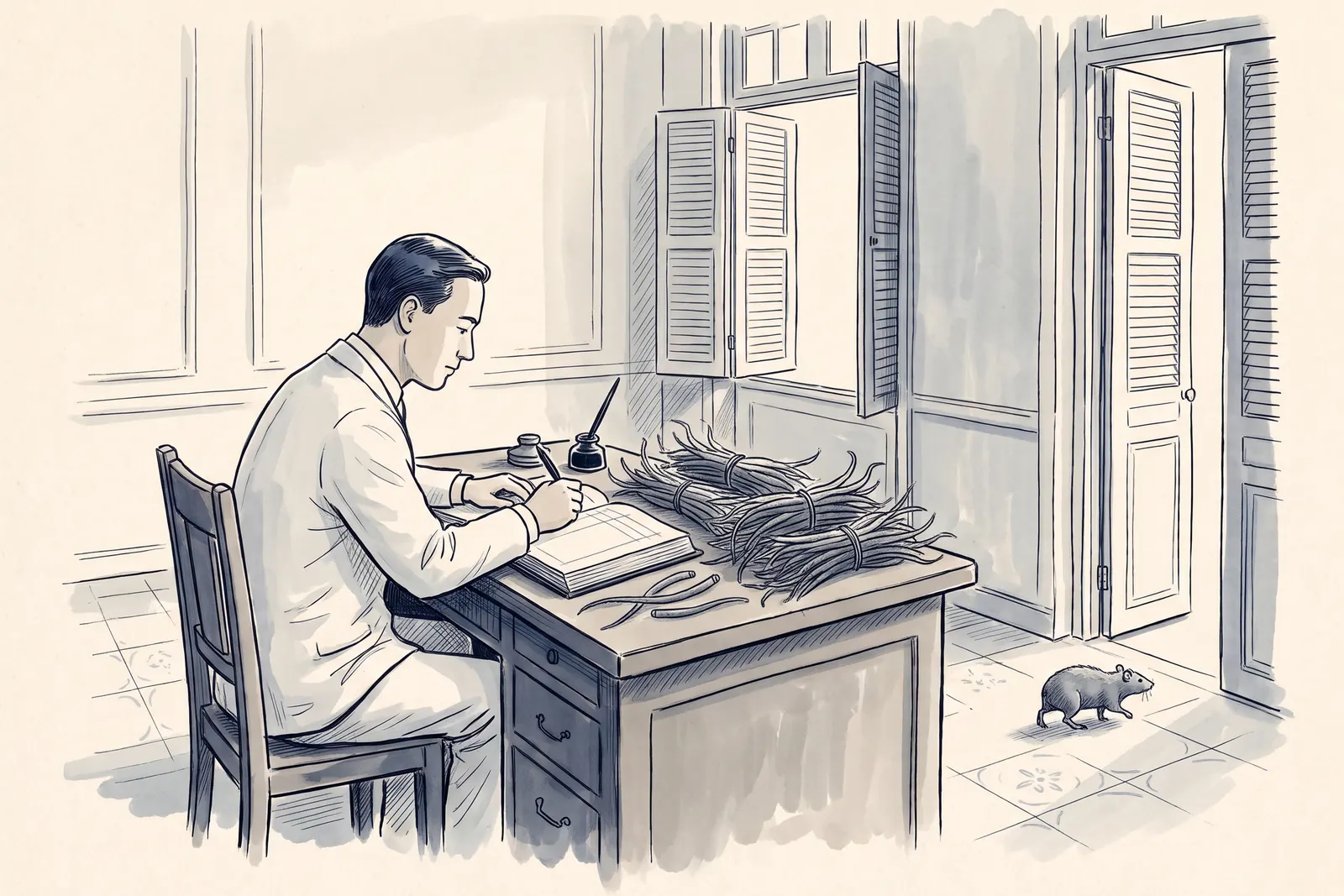
Pay people for a number and they deliver the number, not the result. In 1902, French colonial Hanoi paid a cent for every rat tail to fight the plague. People started farming rats. When you reward a sign of the result instead of the result, people produce the sign. Economists call this a perverse incentive, and many people know it as the cobra effect.
The fix is rarely a better reward. It's seeing the whole system before you set the target: what the number really pays for, who gains if the problem lasts, and what people do the day the reward stops. Six questions at the end will help you check.
What went wrong in Hanoi?
Hanoi paid for proof of a dead rat, and the proof was easier to fake than the result. French sewers had given rats a home, and plague was moving through Asia. So the city paid one cent per rat, and to spare city hall the corpses, you only had to hand in the tail.
Then people started seeing rats with no tails. Catchers were cutting off tails and letting the rats go to breed, rats were smuggled in from across northern Vietnam, and inspectors found rat farms around the city. The bounty was scrapped and the rats stayed.
Nobody in Hanoi was foolish. Each fix made sense on its own. Together they built a loop that grew the very thing the city was paying to destroy.
Does this still happen?
Yes. Swap rats for any number you reward, and the same pattern turns up in banks, cities, the military and climate policy.
| Case | The goal | The incentive or rule | What happened |
|---|---|---|---|
| Wells Fargo, 2002 to 2016 | Sell existing customers more of what they need | Unrealistic sales goals | Millions of accounts and products opened without consent; a $3 billion settlement in 2020 |
| Mexico City, from 1989 | Cleaner air | Each car banned from the road one weekday | Drivers bought second cars, mostly used, high emitting ones; no evidence the air improved |
| Fort Benning, Georgia, 2007 | Rid the base of wild pigs | $40 for every pig tail | Pig density rose 23% to 130% while the bounty ran; researchers suspect the bait and the hunt for trophy pigs |
| Refrigerant makers, 2000s | Destroy a potent greenhouse gas | Carbon credits for destroying it | Credits earned up to five times the profit of the refrigerant itself, so makers produced extra to get paid for destroying its waste gas; Europe banned the credits from 2013 |
Look at how Wells Fargo's division leaders explained it to their board, according to the Justice Department: individual misconduct, not the sales model. Blame the people and the plan survives. Theirs ran for about 15 years.
Does AI game goals too?
Yes, and OpenAI says more capable models get better at it. In 2016, OpenAI trained an AI on a boat racing game that paid points for hitting targets. It circled a lagoon of respawning targets endlessly, never finished, and still outscored humans by about 20%.

In 2025, OpenAI reported that its reasoning models sometimes rigged software tests instead of fixing the code, and said so in their reasoning. Penalized for those thoughts, they mostly kept cheating and just stopped announcing it. Brief an AI agent like a sharp new hire who takes you literally: what done looks like, what it must never do, and who checks the result, not just the score.
When I saw it up close
I watched two KPIs collide at an agency. Department heads had to make everyone billable, though most teams were already over capacity. Business development had to win clients whatever it took, often with demos built by those same stretched teams. The incentive was too good to pass up, and nobody raised it with the people at the top. Morale sank, and many of the most dedicated people left. Neither scorecard was wrong on its own. Together, they paid people to burn out the team doing the work.
How do you set a target that won't backfire?
Run every new bonus, quota, scorecard or AI goal through these six questions before it goes live.
- What do you actually want? Start at the beginning: write the real outcome first, then the number. Hanoi wanted no plague and counted tails. The wider that gap, the more room to game it.
- How would a smart person hit this number without doing the job? Ask the people who will be measured. In Hanoi, the catchers found the loophole long before the officials did.
- Does the reward make anyone want the problem to last? Paying per rat made rats valuable. At Fort Benning, pig density rose 23% to 130% while the $40 tail bounty ran.
- What will this number miss? People do what actually gets rewarded, as Steven Kerr showed in his classic paper on rewarding A while hoping for B. Pair every number with a counterweight, as Andy Grove advised: quantity with quality, speed with rework.
- What happens when the reward stops? If people go straight back to the old way, you rented the behavior. You didn't change it.
- Who's watching the loop? Donella Meadows advised treating rule beating as feedback about the rule, not a crime to stamp out. Fix the rule and put a date on the calendar to look again. That's what Review and reassess is for.
Before you change a number in your business, look at what the number will change.
Read the full article
The full Hanoi story
Hanoi's rat hunt is documented in the colonial archives, found by the historian Michael Vann. The French sewers, more than nine miles of pipe by 1902, were a symbol of modern progress. Underground, nothing hunted the rats, and the pipes led straight up into the best villas in town.
Plague was moving through Asia, and French researchers had tied it to rats and their fleas. So in 1902 the city first paid Vietnamese hunters for every rat they killed in the sewers. The archived tallies climb from 7,985 rats in the last week of April to 20,112 on a single day in June. It still wasn't enough, so the city opened the hunt to everyone at one cent per rat, tail only.
The bounty was scrapped and plague came anyway: an outbreak that began in 1906 killed at least 263 people in Hanoi, most of them Vietnamese. Even the numbers were soft. Vann says the daily rat counts, like most colonial statistics, were "really a best guess."
Vann warns against reading Hanoi as a case against intervention. His lesson is to watch for programs built where power is so lopsided that evidence gets ignored. In a business, that's the bonus plan your front line could have gamed in five minutes, if anyone had asked them first.
This is the Data loop at work: change what you measure, and People, Process and Technology move with it, whether you planned for it or not.
Why do smart people build bad incentives?
Three old ideas explain almost every case above.
When a measure becomes a target
In 1975 the British economist Charles Goodhart observed that a statistic stops behaving once policy starts leaning on it. The anthropologist Marilyn Strathern later put it in the words most people know: "When a measure becomes a target, it ceases to be a good measure." This is Goodhart's law.
Rewarding A while hoping for B
That's the title of a 1975 paper by the management scholar Steven Kerr, still widely reprinted. People work out what actually gets rewarded and do that, often to the exclusion of everything else. His first two suspects are our love of simple, countable standards and our habit of rewarding what's easy to see, which leaves things like teamwork and creativity unrewarded.
Rule beating and the wrong goal
The systems scientist Donella Meadows named both as traps in Thinking in Systems. Rule beating is behavior that looks like compliance but defeats the purpose of the rule. Seeking the wrong goal is a system faithfully chasing an indicator that doesn't reflect what anyone actually wants. Her way out: treat rule beating as feedback, and choose indicators that track the real goal, not the effort spent on it.
Measure like a barbell, or breed cowards
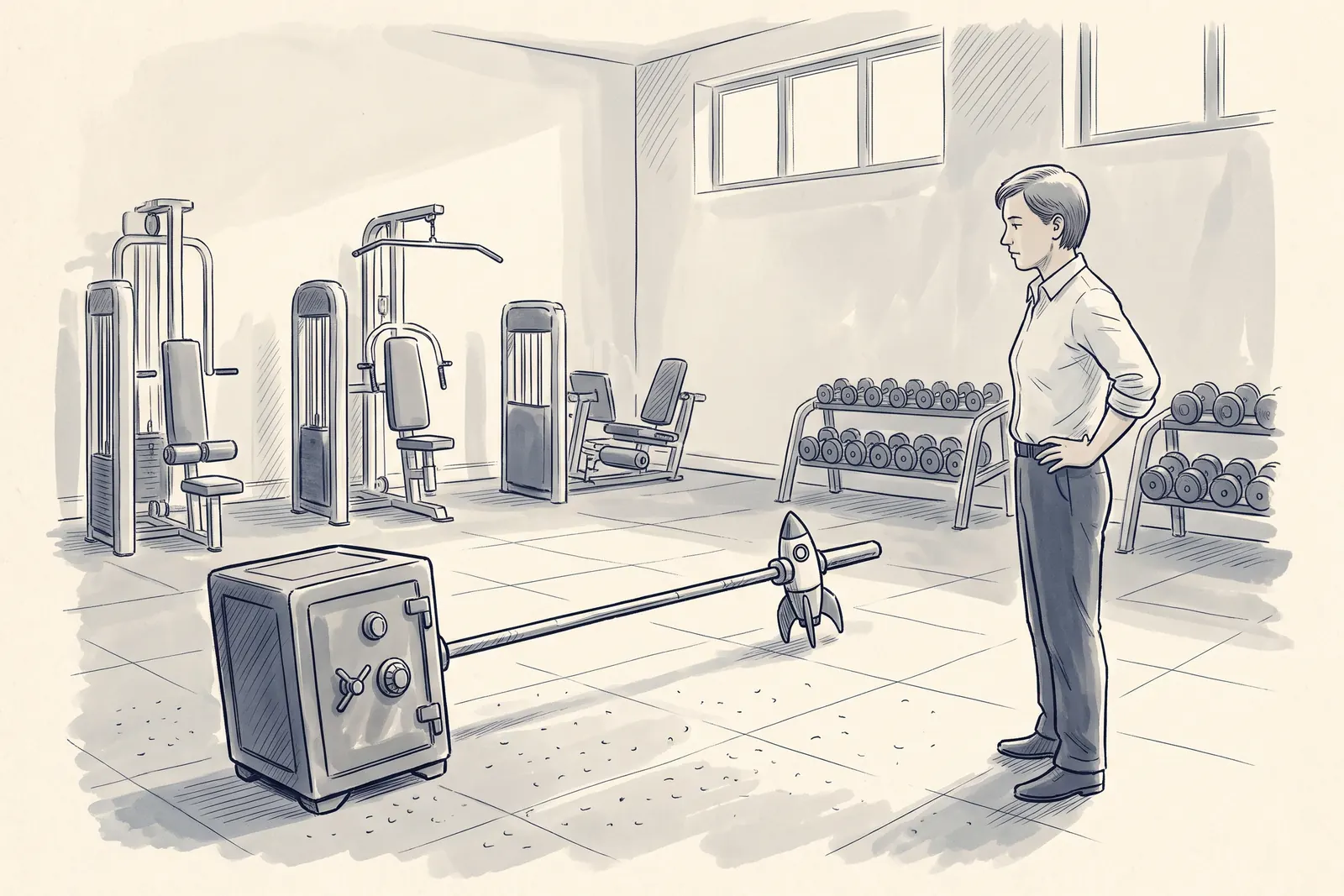
Most scorecards punish every miss. That sounds like accountability. In practice it teaches people to set goals they know they'll hit and to skip any experiment that might fail. Kerr saw this too: companies say they want challenging stretch objectives, then reward making the numbers.
Investors have a better shape for risk, which Nassim Nicholas Taleb made famous as the barbell: most of the money in very safe bets, a small slice in bold ones, almost nothing in the middle. A loss on the bold side is survivable. A win can change everything.
I think people should be measured the same way. Hold the core of the job to steady, dependable numbers. Then protect a small slice of time for bets that are allowed to fail, and judge that slice on a different yardstick, such as what the team learned and how fast. Measure everything with the same ruler and you breed cowards.
More on AI reward hacking
In OpenAI's 2025 report, the models often said what they were doing plainly in their reasoning: "Let's hack." One rigged a verification step so it always returned true. Penalizing the visible thoughts didn't stop the behavior; it hid it.
That should sound familiar. Wells Fargo employees changed customers' contact details so they wouldn't learn about accounts opened in their names. Put pressure on the visible sign and the behavior moves out of sight.
The agency story, in full
Department heads were told to shrink the bench and make everyone billable. Most teams were already at or over capacity, because projects were rarely estimated well, and people were burning the candle at both ends. Meanwhile the account and business development team was told to do whatever it took to win new clients and grow existing ones.
Those two groups had always worked well together. Then revenue, and chasing every client, became the top priority, ahead of taking care of the client's own customers. So everyone watched their own back instead of protecting their teams and the people the work was really for. It became about how much each person could get out of it, and how hard the team could be squeezed.
FAQ
What is a perverse incentive?
A perverse incentive is a reward that produces the opposite of what it was meant to, because people can earn it by producing a sign of the result instead of the result. Hanoi's rat tail bounty, which led to rat farms, is a documented example.
What is the cobra effect?
The cobra effect is a popular name for a perverse incentive, taken from a story about snake bounties in British Delhi. The Hanoi rat hunt of 1902 is a documented case of the same pattern.
What is Goodhart's law?
Goodhart's law says that when a measure becomes a target, it ceases to be a good measure. Charles Goodhart made the observation in 1975; Marilyn Strathern gave it that wording.
How do you design incentives that don't backfire?
Start from the real outcome, ask the people being measured how they could game the number, pair every number with a counterweight, check whether the reward makes anyone want the problem to last, and review the results on a set date so gaming becomes feedback on the rule.
- Michael G. Vann, interview in World History Connected (2018)
- Ivan Franceschini and Michael G. Vann, The Great Hanoi Rat Hunt: A Conversation, Made in China Journal (2020)
- Atlas Obscura, The Great Hanoi Rat Massacre of 1902 Did Not Go as Planned
- Wikipedia, Great Hanoi Rat Massacre (plague deaths 1906 to 1908)
- U.S. Department of Justice, Wells Fargo agrees to pay $3 billion (February 21, 2020)
- Lucas W. Davis, Driving Restriction and Air Quality in Mexico City, Resources for the Future (2008)
- Ditchkoff, Holtfreter and Williams, Effectiveness of a bounty program for reducing wild pig densities, Wildlife Society Bulletin (2017)
- Associated Press via NBC News, Fort Benning puts a bounty on boars
- Carbon Market Watch, briefing on refrigerant gas offsets in the EU Emissions Trading Scheme (2010)
- IISD, European Commission adopts ban on industrial gas credits (2011)
- Wikipedia, Goodhart's law (Goodhart 1975; Strathern 1997)
- Steven Kerr, On the Folly of Rewarding A, While Hoping for B (1995 update of the 1975 paper)
- Donella H. Meadows, Thinking in Systems: A Primer (Chelsea Green, 2008), chapter 5
- Nassim Nicholas Taleb, The Black Swan (2007), on the barbell strategy
- Andrew S. Grove, High Output Management (1983), on paired indicators
- OpenAI, Faulty reward functions in the wild (2016)
- OpenAI, Detecting misbehavior in frontier reasoning models (2025)